Educational information on eye health, nutrition and lifestyle as a possible complementary support to standard ophthalmic care. No content replaces medical visits, diagnosis or prescribed therapies.
Pediatric Contact Lenses Faenza and Ravenna | Eye Doctors

Paediatric contact lenses

Ophthalmic assessment for myopia, sport and special corrections in children, with referral to trusted contact lens practitioners for fitting (Faenza and Ravenna).

Contact lenses for kids: what we do (and what we don’t).

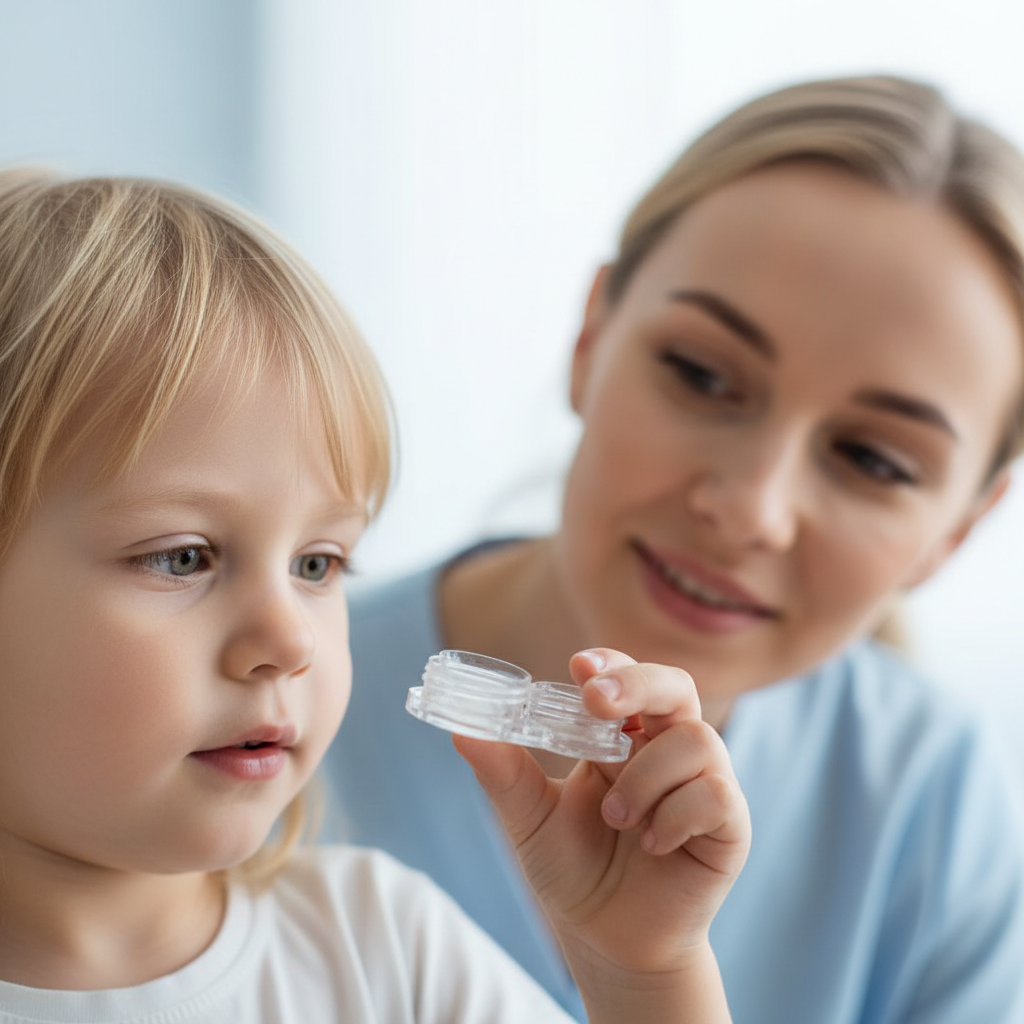
Many parents wonder whether contact lenses are suitable for children. In selected cases (evolving myopia, anisometropia, sport, special conditions) they may be a good option. In our practice we focus on the visual and clinical assessment, discuss indications, limits and risks, and decide together with the family whether lenses make sense for that child. We do not directly fit or apply contact lenses: fitting, material choice and hands‑on training are carried out by contact lens practitioners we trust.

When can lenses be considered (and how we manage them)?
lenti miopia bambini

Myopia control

In some children with progressing myopia, lenses designed for myopia control (for example peripheral‑defocus designs) may be considered. We evaluate history, risks, expectations and spectacle alternatives; if the pathway is appropriate, fitting and technical follow‑up are entrusted to a trusted contact lens specialist.

bambino sport

Sport and active lifestyles

For very active children (football, dance, basketball, martial arts, swimming), spectacles may be limiting or increase trauma risk. We discuss pros and cons of lenses with the family; if a shared decision is reached, the child is referred to a contact lens centre for practical fitting and instructions.

Large difference between the two eyes

In marked anisometropia (for example one highly myopic eye and the other almost emmetropic), spectacles can create problematic image size differences. We frame the situation from an ophthalmic point of view and, if lenses are likely to improve binocular vision, we refer the family to experienced contact lens practitioners.

Aphakia and special situations

In rare conditions (such as operated congenital cataract or aphakia), contact lenses may play an important role in visual rehabilitation. Here we define the clinical programme and follow‑up schedule in collaboration with paediatric contact lens centres.

Scorri le indicazioni

Safety, hygiene and clear roles

Safety is the first priority. Our role is to check for ocular contraindications, explain what lens wear involves (responsibility, hygiene, follow‑up) and decide together with the family whether to proceed. Practical training (insertion, removal, lens care and specific lens selection) is handled by the contact lens practitioner, who has dedicated time and tools. We remain the reference for the child’s eye health and for any problems that arise during the pathway.

And what about lenses in adults?

For adult intolerance, keratoconus and other situations, we provide ophthalmic assessment and collaborate with contact lens practitioners for fitting and follow‑up.

Go to adult contactology →

Parents’ FAQ

There is no fixed age for everyone. We generally start discussing lenses around 6–8 years of age for sport or myopia when the child is motivated and parents are willing to supervise. We check whether medical conditions are suitable; if they are, we refer to a contact lens specialist for fitting and training.

We do not apply lenses directly in our clinic. First fitting, insertion/removal practice and all practical instructions are provided by the contact lens practitioner. We remain available for ophthalmic follow‑up and for evaluating any symptoms such as redness, pain or visual changes.

If significant symptoms arise (pain, marked redness, discharge, light sensitivity, blurred vision), lenses must be removed immediately and an urgent ophthalmic examination is recommended. For questions about comfort, material changes or minor technical adjustments, we coordinate with the contact lens practitioner who follows the child.

Systemic Ophthalmology Network

Oculistica Sistemica
Visit site
Microbiota Oculare
Visit site
Nutrizione Oculistica
Visit site
Eye Longevity
Visit site
Medici Oculisti
Visit site