Educational information on eye health, nutrition and lifestyle as a possible complementary support to standard ophthalmic care. No content replaces medical visits, diagnosis or prescribed therapies.
Contact Lens Intolerance & Systemic Care | Eye Doctors

Systemic contactology and intolerance

When lenses become uncomfortable: adding a systemic view to standard contact lens practice, without replacing evidence‑based rules (Faenza and Ravenna).

A change in perspective

For years the main question was: “Which lens should I fit on this eye?”. From a systemic ophthalmology standpoint we add another: “On which ocular surface and within which organism am I fitting this lens?”. Intolerance or drop‑out almost never depends on a single cause, but on a combination of tear film, lids, wearing habits, environment and general health. The systemic approach complements standard contact lens practice by reasoning more clearly about each case. For further insights, visit SystemicOphthalmology.it.

Why do lenses cause discomfort?

It is rarely a “mysterious rejection”, but rather a sign that surface and context are no longer in balance.

Local exposome

A lens creates an artificial micro‑environment on the cornea. If the external environment is unfavourable (dry air, AC, screen use) and the tear film is fragile, the surface inflames and the lens feels like a foreign body.

Flogoaging

Systemic medicine uses "flogoaging" to describe mild persistent inflammation. After years of comfortable wear, dry eye or blepharitis can reduce tolerance, making the eye “refuse” lenses. It complements standard diagnosis.

Surface defences (Defensome)

The network of ocular defences: tear film, microbiota, lids and local immunity. When these elements are compromised, lenses become one more load for the surface. Tolerance depends on several interacting factors.

Scorri

The 4 inflammatory response profiles (“flogotypes”)

This classification belongs to systemic medicine and has a descriptive purpose: it is not an official diagnosis, but a map to think about possible inflammatory and metabolic contributions.
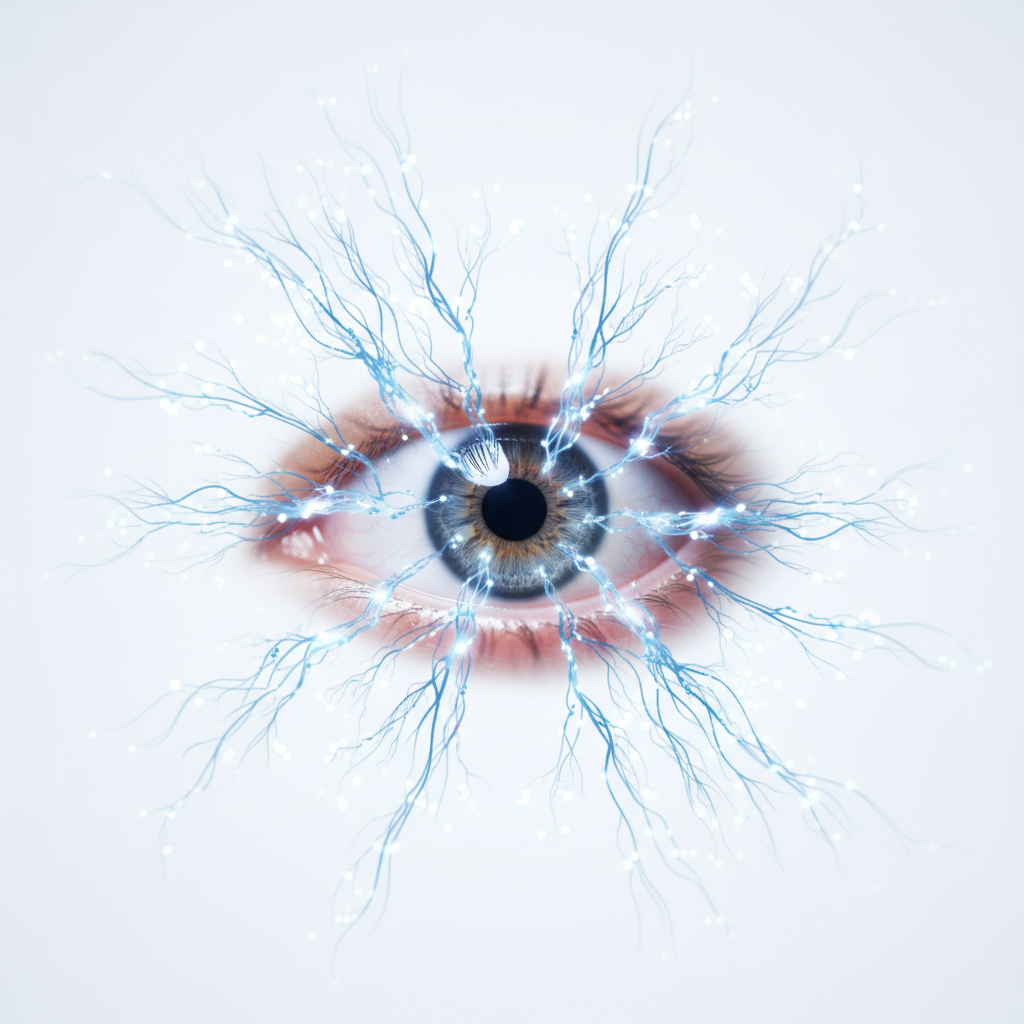
occhio stressato

Stressed Profile

Reduced sleep, intense stress and allergies may lower basal tearing and increase surface sensitivity. Patients report end‑of‑day discomfort, connecting stress, sleep and lens tolerance.
intestino occhio

Dysbiotic Profile

Within “gut–eye axis” models, systemic medicine hypothesises that gut dysbiosis may be associated with ocular surface imbalance, facilitating inflammatory reactions to lens deposits.

Dysmetabolic Profile

High sugar intake and Meibomian gland dysfunction can make the tear film thicker and unstable. Patients often complain about frequent fogging and the need to clean lenses often.

Intoxicated Profile

A deliberately schematic term for a high load of stressors: multiple medications, smoking, alcohol and chronic disease. The ocular surface becomes more reactive and lens tolerance drops.

Scorri i profili

How we approach lens intolerance

The goal is not to switch brands blindly, but to see if there is room to improve the ocular surface and overall context. We follow a stepwise pathway:

Surface Assessment

We examine tear film, blepharitis, Meibomian function and signs of inflammation. Ocular microbiota analysis may be considered as an in‑depth investigation.

Targeted Nutrition

In dysmetabolic or dysbiotic profiles, dietary changes and specific support (e.g. omega‑3) may be suggested to support the lipid tear film and ocular surface.

Lid Hygiene

Before insisting on lenses, we treat lid margin disease and ocular rosacea with recommended cleaning regimens. Healthy lids are a prerequisite for good tolerance.

Lens Choice

Once the eye is “quiet”, we reassess lens type (daily, silicone hydrogel, RGP, scleral), wearing time, breaks and care systems, in line with contact lens guidelines.

Scorri le soluzioni

Looking for lenses for children?

For myopia management, sports and paediatric fitting, we refer to a dedicated section, where decisions are always shared with parents and the paediatrician.

Go to paediatric lenses →

Frequently asked questions on drop‑out

In most cases this is not a true allergy to lens material, but a combination of factors: preservatives, denatured protein deposits, or an already inflamed surface. Specific tests can check for an allergic component if needed.

In many cases yes, but only after restoring good ocular surface health. A wash‑out period, treatment of any blepharitis and review of wearing habits are needed.

Daily lenses reduce issues with deposits and preserved solutions. However, if the tear film is severely altered or the surface is inflamed, even daily lenses may cause discomfort. Lens choice must be individualised.

Systemic Ophthalmology Network

Oculistica Sistemica
Visit site
Microbiota Oculare
Visit site
Nutrizione Oculistica
Visit site
Eye Longevity
Visit site
Medici Oculisti
Visit site

Intolleranza Lenti a Contatto Faenza Ravenna - Contattologia Sistemica

Gestione del drop-out e intolleranza alle lenti a contatto a Faenza e Ravenna. Inquadramento sistemico di occhio secco, blefarite, infiammazione e alterazioni del microbiota oculare legate all'uso delle lenti.